
Renewable Energy Equipment
From consulting and strategy development to implementation and support, our comprehensive services can help your business thrive.
NexusMundi International Solar Panels
represent premium, high-capacity photovoltaic (PV) modules engineered for commercial rooftop configurations, utility-scale grids, and heavy-duty industrial power setups. Expanding upon your Renewal Energy Equipment infrastructure, this high-efficiency equipment tier prioritizes maximum levelized cost of energy (LCOE) reduction, long-term power degradation defense, and strict grid regulatory compliance. Procurement selectors bypass residential-tier limitations to focus directly on N-Type TOPCon or HJT architectures, bifacial energy gain factors, positive power tolerances, and advanced structural load ratings
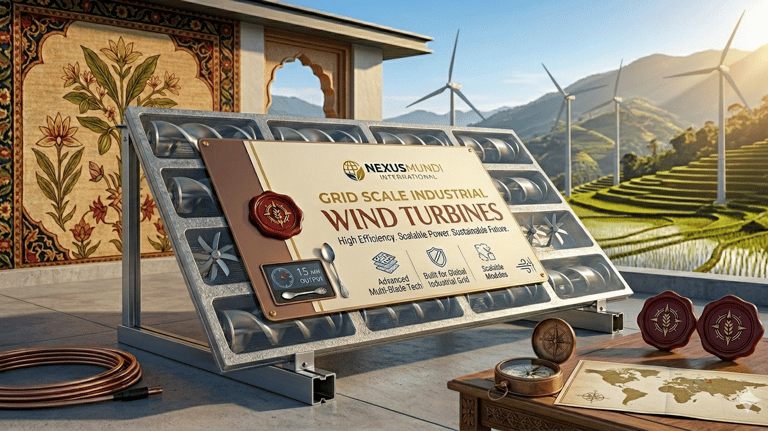
NexusMundi International Grid-Scale Industrial Wind Turbines
represent utility-class wind energy conversion systems (WECSs) engineered for large-scale onshore wind farms and extreme offshore marine deployments. Expanding upon your Renewable Energy Equipment WHOLESALE infrastructure, this megawatt-class industrial hardware focus relies on maximizing aerodynamic torque, decreasing the Levelized Cost of Energy (LCOE), and satisfying complex international grid-code compliance frameworks. Procurement cycles for utility-scale turbines step completely away from light solar components, prioritizing multi-megawatt (MW) generator configurations, rotor swept area dynamics, sub-station transformer integration, and complex freight logistics.


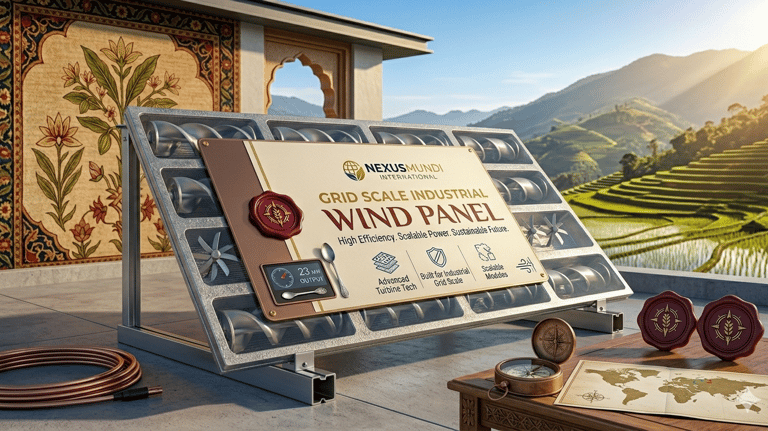
NexusMundi International Grid-Scale Wind Panels
(often referred to commercially as WindWalls or modular boundary kinetic arrays) represent a boundary-pushing leap in decentralized renewable energy equipment. Operating within your Renewable Energy Equipment WHOLESALE infrastructure, this technology shifts away from massive, single-axis rotating blades to deploy honeycombed arrays of interconnected micro-turbines and solid-state aerodynamic panels. By flattening the spatial footprint of wind harvesting, these megawatt-class panel configurations are engineered to capture wind energy across urban boundaries, architectural facades, and land spaces entirely unsuitable for traditional horizontal-axis turbines.
NexusMundi International Industrial Turbine Power Plants
represent the utility-scale consolidation of decentralized kinetic arrays, functioning as comprehensive multi-megawatt (MW) clean energy generating stations. Operating at the apex of your Renewable Energy Equipment WHOLESALE infrastructure, this power plant architecture shifts away from traditional, massive rotating single-axis machinery to deploy modular, solid-state boundary layers. Instead of standard single-point utility generation, a NexusMundi Turbine Power Plant functions as an aggregated grid-connected field, optimizing power dispatch through highly integrated fluid-dynamic clusters.
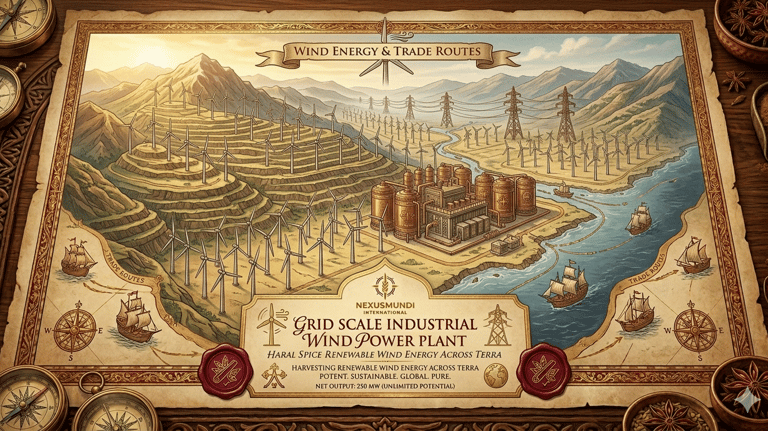
NexusMundi International Wind Energy & Trade Route Framework
represents the strategic alignment of macro-logistics, trans-oceanic supply chains, and Grid-Scale Wind Assets mapped directly across global maritime and overland trade corridors. At a wholesale and enterprise level, this framework treats wind energy not just as local electrical grid generation, but as a critical supply chain factor that dictates industrial manufacturing locations, port upgrading economics, and regional trade route dynamics. Managing energy trade routes balances green corridor manufacturing with deep-water port infrastructure and multi-state transmission grids.
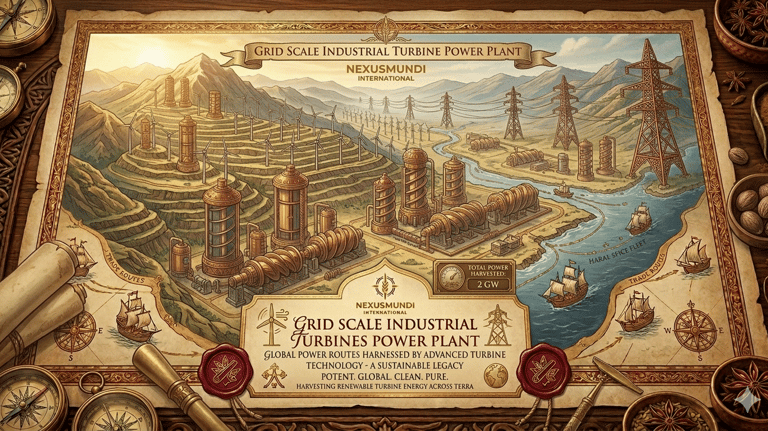
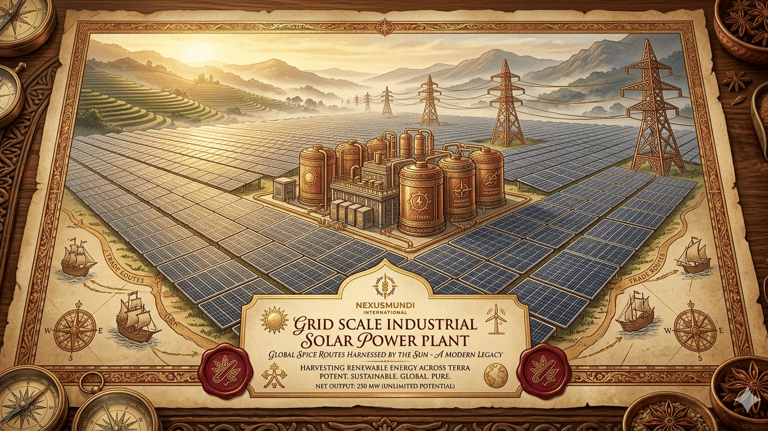
NexusMundi International Grid-Scale Industrial Power Plants
represent utility-class energy generation hubs designed to integrate multiple renewable or high-compliance inputs into a single, synchronized power station. Functioning as the industrial culmination of your Renewable Energy Equipment WHOLESALE infrastructure, these setups pool massive generation arrays to stabilize transmission networks, meet stringent grid codes, and deliver multi-megawatt (MW) baseload capacities directly to utility dispatchers. Rather than relying on isolated generation points, these plants function as integrated, software-managed energy complexes featuring multi-input harmonization, advanced substation automation, and utility-scale energy storage.
NexusMundi International
We sit on both sides of the customs desk.
Navigate
Home
Sectors
Global Presence
About
Trade Finance
Contact
Registered Head Office :
01, Jagvandan , Bhusra City, Khonagoriyan,
Jagatpura Jaipur, Rajasthan 302017, India
New Delhi Office : RZ-F 338 Nihal Vihar, Nangloi Delhi-110041
Email : inexusmundi@gmail.com, info@nexusmundi.in
Website: www.nexusmundi.in
Whatsapp: +91-960-2570-498 /+91-8130-161-889/ +91-836-8492-099
(C) 2026 NexusMundi International Private Limited, . Registered in India. Operating across four continents.
Multi-border. Customs-cleared. On-ground.